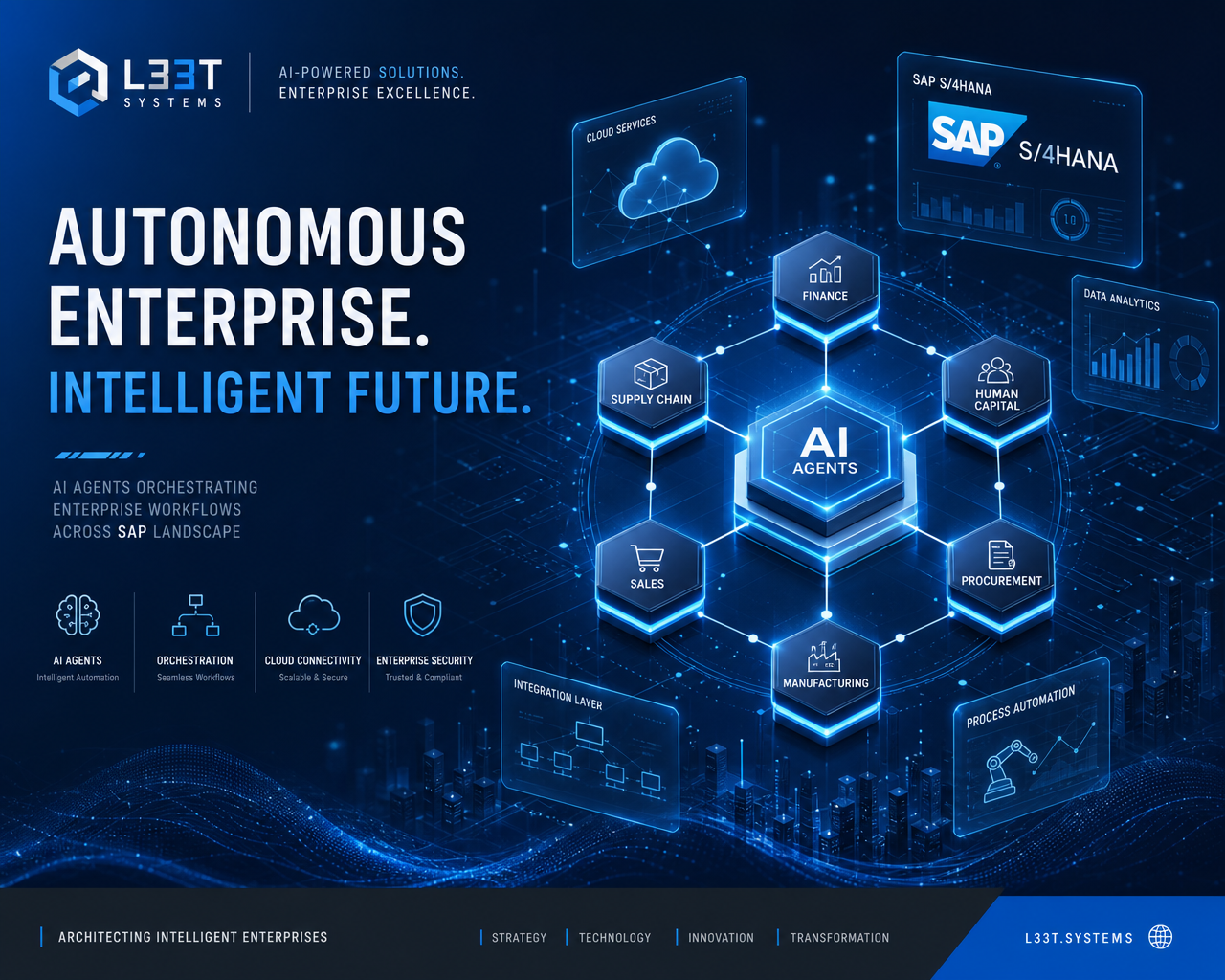
The Hidden Cost of Bolting AI onto Legacy Visual Enterprise Systems
The AI Integration Trap
Every manufacturing CTO we talk to wants AI-powered engineering workflows. They see competitors using machine learning for design optimization, predictive maintenance, and automated quality control. So they ask their teams to "add some AI" to their Visual Enterprise systems.
Six months later, they have expensive proof-of-concepts that don't scale, AI models that can't access the data they need, and integration challenges that nobody anticipated. The problem isn't the AI technology. It's trying to force modern AI capabilities into architectures designed for a different era.
Why Retrofit Approaches Fail
Legacy Visual Enterprise systems weren't designed for the data patterns that AI requires. They optimize for human visualization workflows, not machine learning pipelines. When you bolt AI capabilities onto these systems, you create bottlenecks that limit what's actually possible.
The data flow becomes the constraint. AI models need continuous access to CAD data, manufacturing parameters, and real-time sensor inputs. Legacy systems typically batch this data or require multiple integration hops to access it. By the time your AI model gets the data it needs, the opportunity for real-time optimization is gone.
Performance becomes unpredictable. Visual Enterprise systems handle peak loads during design reviews or major project deliverables. Add AI workloads to the same infrastructure, and you're competing for compute resources. Engineering teams suddenly can't access their normal workflows because AI training jobs are consuming system capacity.
The Architecture Tax
Every retrofit creates technical debt. You end up with data synchronization jobs, custom APIs, and middleware layers that exist only to make incompatible systems work together. Each layer adds latency, complexity, and failure points.
Worse, these integration layers limit your AI capabilities. You can't implement sophisticated digital twin scenarios when your data has to pass through three different transformation layers. You can't do real-time optimization when your AI models are working with stale data.
The business impact compounds over time. Teams spend more time maintaining integrations than building new AI capabilities. Every new use case requires custom development work. What should accelerate innovation becomes a constraint on it.
AI-Native Architecture Principles
The enterprises succeeding with AI-augmented Visual Enterprise start with architecture designed for both human and machine workflows. They create data platforms where AI models can access the same information streams that power visualization and collaboration.
This means API-first designs where both Visual Enterprise components and AI services consume data from shared sources. It means compute architectures that can handle both interactive visualization workloads and batch AI processing without conflicts.
Most importantly, it means planning for AI capabilities during Visual Enterprise modernization, not after. When you architect systems with AI integration in mind, you create platforms that can absorb new machine learning capabilities as business requirements evolve.
The Integration Sweet Spot
Successful AI integration happens at the platform level, not the application level. You need hybrid cloud architectures that can run Visual Enterprise workloads on-premise while leveraging cloud-based AI services for compute-intensive tasks.
You need data architectures where engineering workflows and AI training pipelines can coexist without creating resource conflicts. You need integration patterns that let AI insights flow back into Visual Enterprise workflows without custom development for every use case.
L33t Systems designs these AI-native architectures from the ground up. We understand both Visual Enterprise internals and modern AI platform patterns. Our approach creates systems where AI capabilities enhance engineering workflows instead of competing with them.
When AI becomes integral to how your teams work, not just an expensive add-on, you'll see the productivity gains that make these investments worthwhile.

L33t Systems SAP VE
Senior solution architecture for SAP Visual Enterprise, AI delivery, and cloud platforms. The four positioning pillars:
Discover what we're building
Learn more about L33t Systems SAP VE and get started today.
Visit L33t Systems SAP VE