Why SAP Visual Enterprise Migrations Keep Failing (And How to Fix Them)
The 73% Problem
Three out of four SAP Visual Enterprise modernization projects exceed their original timeline and budget. The culprit isn't the technology itself. It's the gap between understanding Visual Enterprise as a product and architecting it as an enterprise-scale platform.
Most teams approach these projects like traditional software migrations. They focus on feature parity and data transfer while missing the deeper architectural decisions that determine long-term success.
Where Things Go Wrong
The complexity hits during integration planning. Visual Enterprise sits at the intersection of CAD data management, product visualization, and manufacturing workflows. When you add modern requirements like AI integration and hybrid cloud deployment, the architectural decisions multiply exponentially.
We've seen teams spend months debating whether to lift-and-shift or rebuild from scratch. They create detailed migration plans that look perfect on paper but ignore how Visual Enterprise actually behaves under enterprise load.
The real killer is treating this as a pure IT project. Visual Enterprise touches engineering workflows, manufacturing processes, and customer-facing applications. Miss any of these connections during architecture planning, and you're looking at costly rework.
The Architecture-First Approach
Successful Visual Enterprise modernizations start with architecture, not migration planning. You need to understand how your target state will handle current workloads plus future requirements like AI-augmented engineering and digital twin integration.
This means mapping out data flows, API dependencies, and performance bottlenecks before you touch any legacy systems. It means designing for hybrid cloud scenarios where some workloads stay on-premise while others move to specialized HPC environments.
Most importantly, it means having senior architects who understand both SAP Visual Enterprise internals and modern platform patterns. The combination is rare, which explains why so many projects struggle.
Building for Tomorrow's Requirements
The enterprises getting this right aren't just modernizing Visual Enterprise. They're creating platforms that can absorb AI capabilities, connect with digital twins, and scale across hybrid cloud environments.
They start with clear architectural principles: API-first design, cloud-native patterns where appropriate, and integration points that can handle future technology additions. They plan for performance at scale, not just feature migration.
This approach costs more upfront but saves millions in rework when business requirements change or new technologies emerge.
What Senior Architecture Brings
Experienced solution architects see patterns that general consulting teams miss. They know which Visual Enterprise components can safely modernize independently and which require coordinated changes. They understand the performance implications of different cloud architectures and can design systems that balance cost, compliance, and capability.
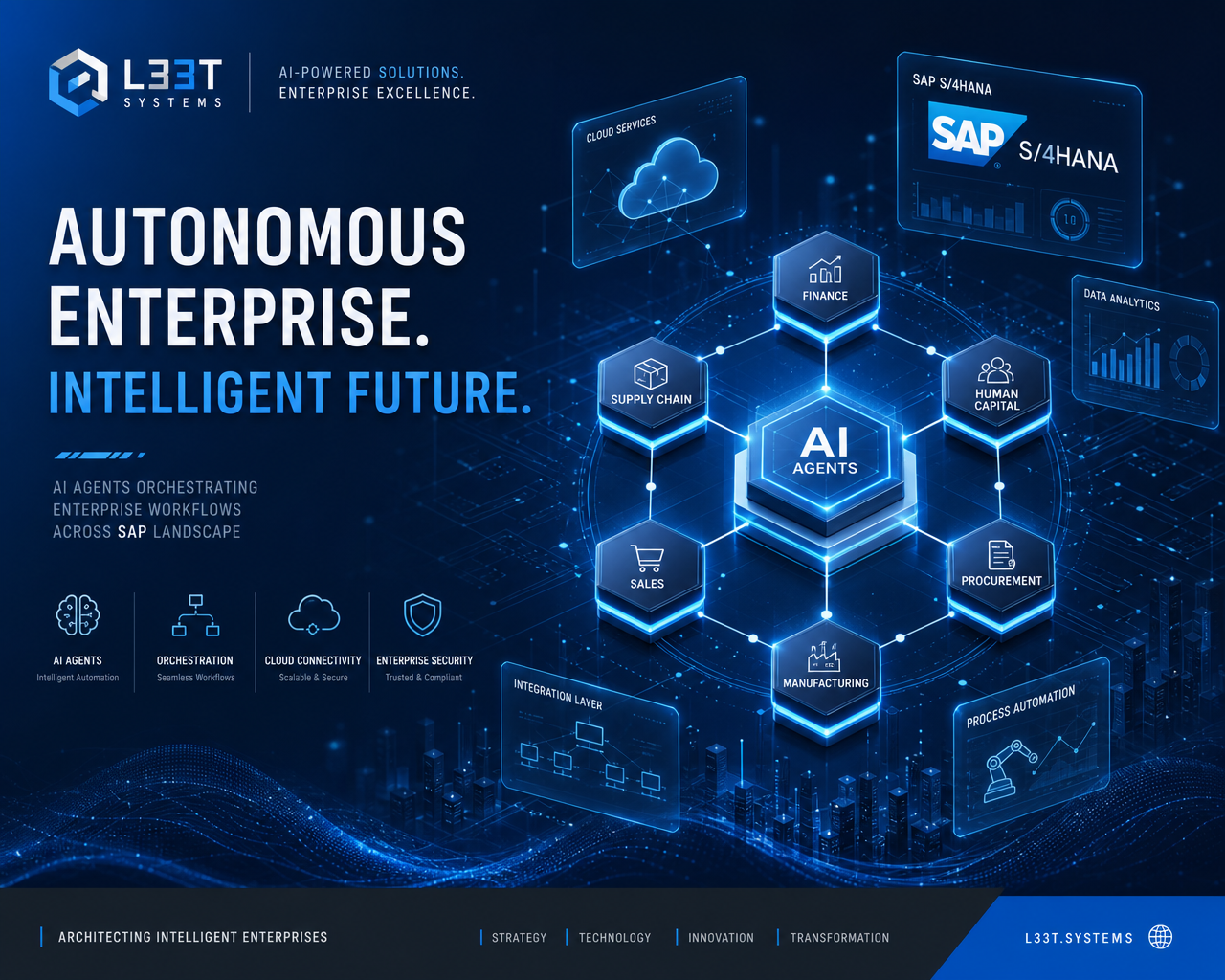
L33t Systems specializes in exactly this challenge. We provide the senior-level architecture expertise that bridges Visual Enterprise modernization with AI integration and hybrid cloud deployment. Our approach reduces migration risk while creating platforms that support your next decade of digital transformation.
When Visual Enterprise becomes the foundation for AI-augmented engineering workflows, architectural decisions made today determine what's possible tomorrow.

L33t Systems SAP VE
Senior solution architecture for SAP Visual Enterprise, AI delivery, and cloud platforms. The four positioning pillars:
Discover what we're building
Learn more about L33t Systems SAP VE and get started today.
Visit L33t Systems SAP VE